
Description
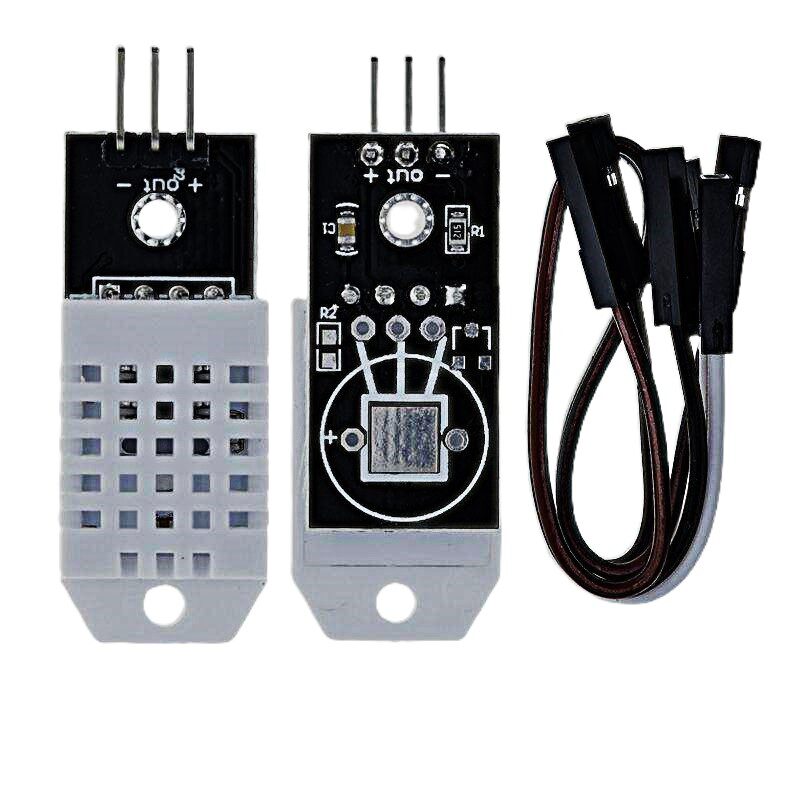
The DHT22 (also known as the AM2302) is a popular, low-cost digital sensor used to measure ambient temperature and relative humidity. It is widely used in DIY electronics, IoT projects, and environmental monitoring because it is reliable, easy to interface with microcontrollers like Arduino, ESP32, and Raspberry Pi, and provides calibrated digital output.
Key Specifications
How It Works
The sensor contains two primary components inside its housing:
-
Capacitive Humidity Sensor: Measures humidity by detecting changes in the electrical properties (capacitance) of a substrate as it absorbs moisture from the air.
-
Thermistor (NTC): Measures temperature by detecting changes in electrical resistance as the temperature fluctuates.
An internal IC processes these analogue signals, calibrates them, and transmits the data to your microcontroller via a single digital data pin using a specific timing-based serial protocol.
Basic Connections
The sensor usually has three or four pins. If you are using a module (which is mounted on a small PCB), it typically has three pins labelled:
VCC: Connect to 3.3V or 5V (depending on your microcontroller).
DATA: Connect to a digital I/O pin on your microcontroller.
Note: A pull-up resistor (typically 4.7kΩ to 10kΩ) is usually required between the DATA and VCC pins. Most DHT22 modules include this resistor on the board already.
GND: Connect to Ground.
Usage Tips
-
Sampling Interval: The DHT22 is relatively slow. Do not request data more frequently than once every 2 seconds, or you may receive errors or stale data.
-
Compatibility: While it uses a single-wire digital interface, it is not Dallas One-Wire compatible. Each sensor requires its own dedicated data pin if you are using multiple sensors.
-
Libraries: For platforms like Arduino, it is highly recommended to use established libraries (such as the Adafruit DHT Sensor Library) to handle the complex timing required for communication, so you don’t have to write the protocol code yourself.
Reviews
There are no reviews yet.